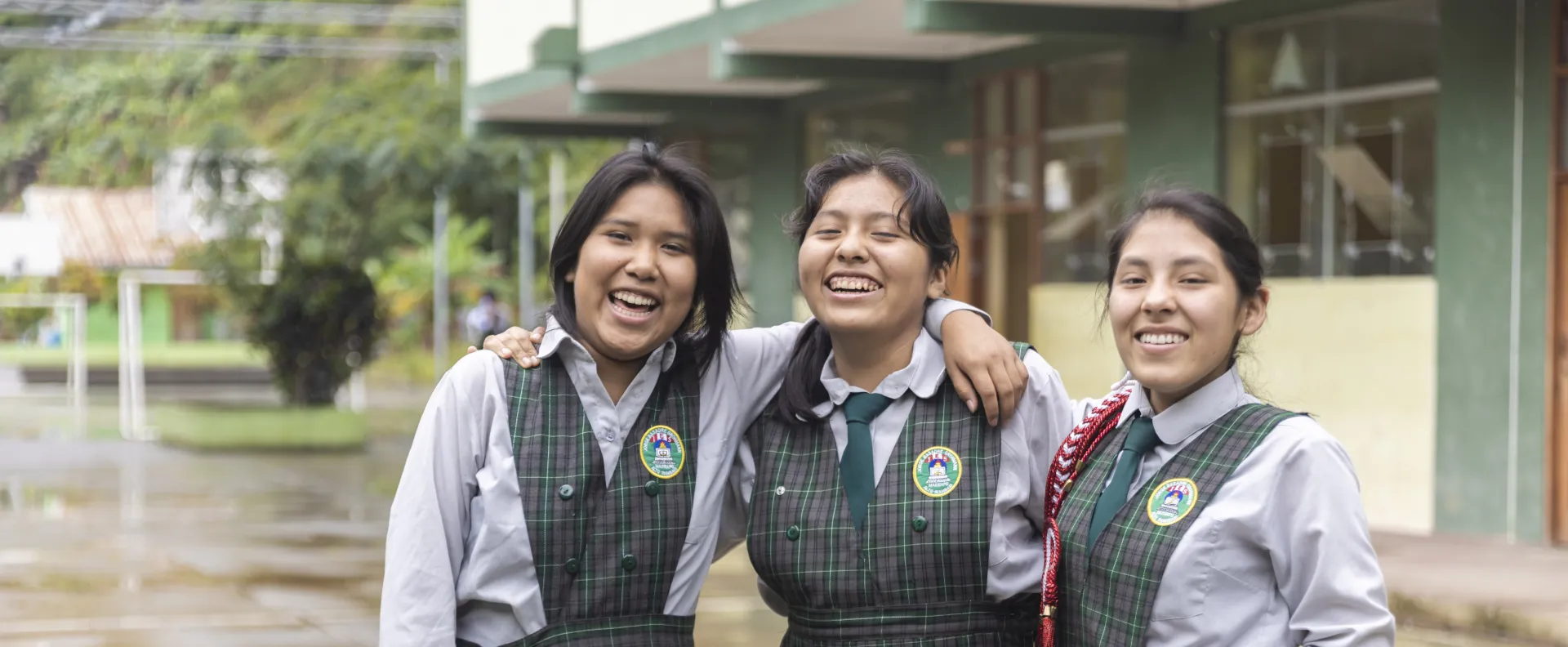
Introduction to the UNESCO Prize for Girls
The UNESCO Prize for Girls’ and Women’s Education is designed to honor outstanding and innovative contributions to the advancement of girls’ and women’s education. In this Article you will be taken through the process of How to Apply for UNESCO Prize for Girls 2026.
In a world where 130 million girls remain out of school and systemic barriers continue to limit women’s potential, the UNESCO Prize for Girls’ and Women’s Education, stands as a beacon of recognition and support. Established in 2015 and first awarded in 2016, this pioneering accolade is the only UNESCO Prize dedicated exclusively to advancing the educational rights and opportunities of girls and women. It is funded by the government of the People’s Republic of China.
the prize honors two laureates annually and it could be awarded to individuals, institutions or organizations whose innovative projects have demostrated measurable impact improving quality, and transforming outcomes in girls’ and women’s education. Each laurets is awarded a prize of $50,000, to scale such innitiative thus, ensuring that proven solutions reach more learners. Since its inception, the Prize has honored 18 laureates from 15 countries, amplifying initiatives across continents.
It recognizes efforts that not only get girls into classrooms but also ensure they stay, succeed, and lead. Whether through STEM mentorship in rural Africa, digital literacy for displaced women, or policy reforms dismantling gender bias in curricula. The laureates showcase models that ripple beyond the classroom—improving health, economic independence, and community leadership.
Selection process for the UNESCO Prize for Girls
The selection process reflects UNESCO’s commitment to excellence and impartiality. An independent international jury of five distinguished experts in gender, education, and development evaluates nominations from UNESCO Member States and partner organizations. Their recommendations guide the UNESCO Director-General, who formally confers the Prize during a high-profile ceremony at UNESCO Headquarters in Paris. the jury include:
- Mayyada Abu Jaber (Jordan):
Mayyada Abu Jaber is the founder of JoWomenomics, a non-profit organization to foster mindset change towards greater women’s economic participation, and also the founder of World of Letters. - Christina Ting Kwauk (United States of America):
Christina Ting Kwauk is an education consultant, Research Director at Unbounded Associates and a Future Rising Visiting Scholar at Girl Rising. - Alex Munive (Colombia)
Alex Munive is the Senior Technical Lead at the Global Centre for Gender Equality, where he leads the Feminist Leadership Pillar and team in developing solutions and curricula for advancing gender transformative change. Prior to this role, Alex served as the Head of Gender Equality and Inclusion for Plan International. - Simone Yankey-Ouattara (Côte d’Ivoire)
Simone Yankey-Ouattara is currently the Acting Coordinator of the African Union’s International Centre for Girls and Women’s Education in Africa (AU/CIEFFA). She is also the Senior Policy Officer at the AU/CIEFFA in charge of various portfolios. - Zuoyu Zhou (People’s Republic of China)
Zuoyu Zhou is the Vice President of Beijing Normal University, where he is also a professor in the Faculty of Education. He chairs the Educational Evaluation Branch of the China Association of Higher Education.
Who can apply for the UNESCO Prize for Girls?
Nominations are made by governments of UNESCO Member States or non-governmental organizations (NGOs) in official partnership with UNESCO. They can nominate up to three individuals, institutions, or organizations making strong, innovative contributions to girls’ and women’s education. Self-nominations are not possible. Interested candidates are invited to contact their country’s National Commission for UNESCO/Permanent Delegation to UNESCO, an NGO in official partnership with UNESCO or the Prize Secretariat for more information.
Deadline:
Nominations for the 2026 cycle open in early 2025. Governments, NGOs, and educational bodies are urged to nominate trailblazers whose work is **changing lives, one classroom at a time.
How to Proceed if You’re Interested:
If you or your organization believe you meet the criteria, your best course of action is to:
Contact your country’s National Commission for UNESCO.
Reach out to NGOs in official partnership with UNESCO.
Express your interest and provide them with information about your work.
Key Points:
- Nomination-Based:
A. It’s crucial to understand that this is a nomination-based prize. Individuals or organizations cannot directly apply (self-nominate).
B. Nominations are submitted by:
Governments of UNESCO Member States (via their Permanent Delegations to UNESCO).
Non-governmental organizations (NGOs) in official partnership with UNESCO.
2. Who Can Be Nominated:
A. Individuals, institutions, or organizations that have made significant contributions to girls’ and women’s education are eligible.
B. The nominated project or program must:
Have been running for at least two years.
C. Demonstrate impact, innovation, and sustainability.
3. The Process:
Call for Nominations: UNESCO announces the call for nominations annually, often around International Women’s Day (March 8th).
4. Nomination Submission:
Eligible nominators (Member States and partner NGOs) submit nominations through an online platform.
Nominations must be in English or French.
Evaluation:
5. An independent international jury evaluates the nominations based on established criteria.
The jury’s recommendations are presented to the UNESCO Director-General.
Award:
The UNESCO Director-General selects the laureates.
The prize is awarded at a ceremony, often around the International Day of the Girl Child (October 11th).
Each laureate receives $50,000 USD.
How to Apply for University of Padua Scholarship
- How to Apply for Joint Japan/World Bank Graduate Scholarship Program for 2026
- How to Apply for the Open Doors Russian Government Scholarship
- How to Apply for The Chinese Government Scholarship (CSC)
- How to Apply for Erasmus Mundus Joint Masters Scholarship 2026
- How to Apply for University of Milan Excellence Scholarship 2026


This is a great article, i am simply a fun, keep up the good work, just finish reading from https://websiteerstellenlassenbamberg.de// and their work is fantastic. i will be checking your content again if you make next update or post. Thank you